
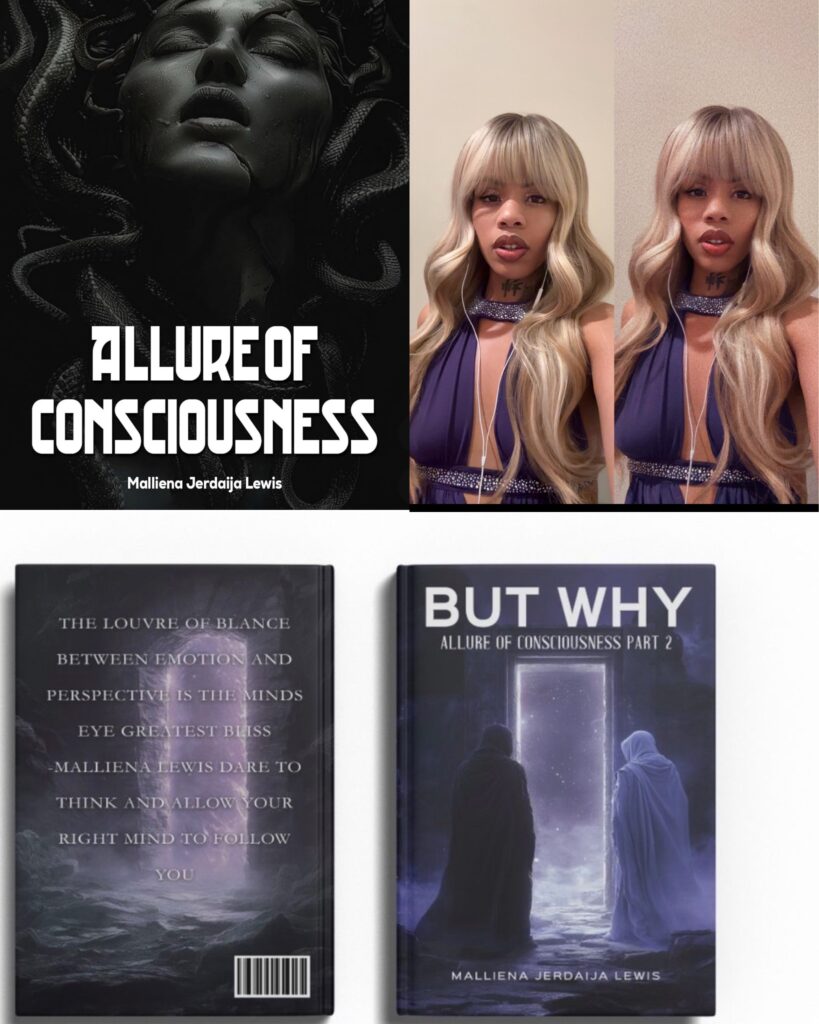
In an era where literature often races to keep Pace with trends, Malliena Jerdaija Lewis emerges as a writer deeply invested in something far more enduring: the interior world or design of human consciousness. Through her compelling works Allure of consciousness and but why? , Lewis invites readers into an intellectual and emotional journey that is both deeply personal and universally resonant .
Her writing doesn’t merely tell stories it interrogates existence itself . With poetic intensity and fearless introspection, Lewis crafts narratives that challenge readers to examine identity, emotional survival, spirituality, trauma, purpose, and the often uncomfortable truths hidden beneath moderns life polished surfaces , expectations as well as everyday pressures.
A voice rooted in reflection
What distinguishes Lewis from many contemporary authors is her refusal to simplify complexity of human emotion . Her pose carries a reflective sophistication balancing philosophical inquiry with raw vulnerability. Each page feels intentional layered with questions. That linger long after the reading experience concludes .
In an Allure of consciousness, Lewis. Explains the seductive nature of awareness itself a the burden and beauty of awakening emotionally, spiritually, methodically and psychologically. The book moves through themes of self – discovery perception, and transformation with an elegance that feels almost cinematic . Rather than offering conclusions, Lewis encourages readers to sit with discomfort, uncertainty, and revelation .
There’s a striking intimacy in her approach. She writes as though she speaking directly to the hidden parts of self and many people rarely voice this out loud . The result is a reading experience that feels less like passive entertainment and more like an encounter.
The Courage Behind But why ?
If allure of consciousness is an awakening , then But why ? Is the confrontation that follows.
The title alone captures the emotional architecture of the work : a relentless pursuit of understanding. Why do people repeat destructive patterns? Why do we allow pain to shape identity ? Lewis approaches these questions not with cynicism but with fearlessness and honesty.
What makes But why ? particularly compelling is it emotional intelligence. Lewis understands that questioning is not weakness it’s evolution as is.

