
The modern World Cup presents a paradox.
It is the most accessible global sporting event in terms of attention — billions watch, engage, and follow every moment. And yet physically, it remains one of the least accessible. Tickets are limited, distribution is fragmented, and access to premium experiences is increasingly controlled.
For many, the stadium isn’t an option.
For others, it’s no longer the aim.
Club 26 enters this landscape not as a substitute, but as the alternative.

The idea is straightforward: If access to the stadium is constrained, the experience outside of it should be elevated — not diluted. In a city like New York, during a World Cup, that means rethinking what it really means to watch a match.
At its core, Clun 26 is built around one principle — that the emotional intensity of football can be preserved — and even amplified — beyond the stadium.
Large-format screens are expected. High-quality sound is standard. But those alone don’t recreate matchday.
What is the density of reaction?
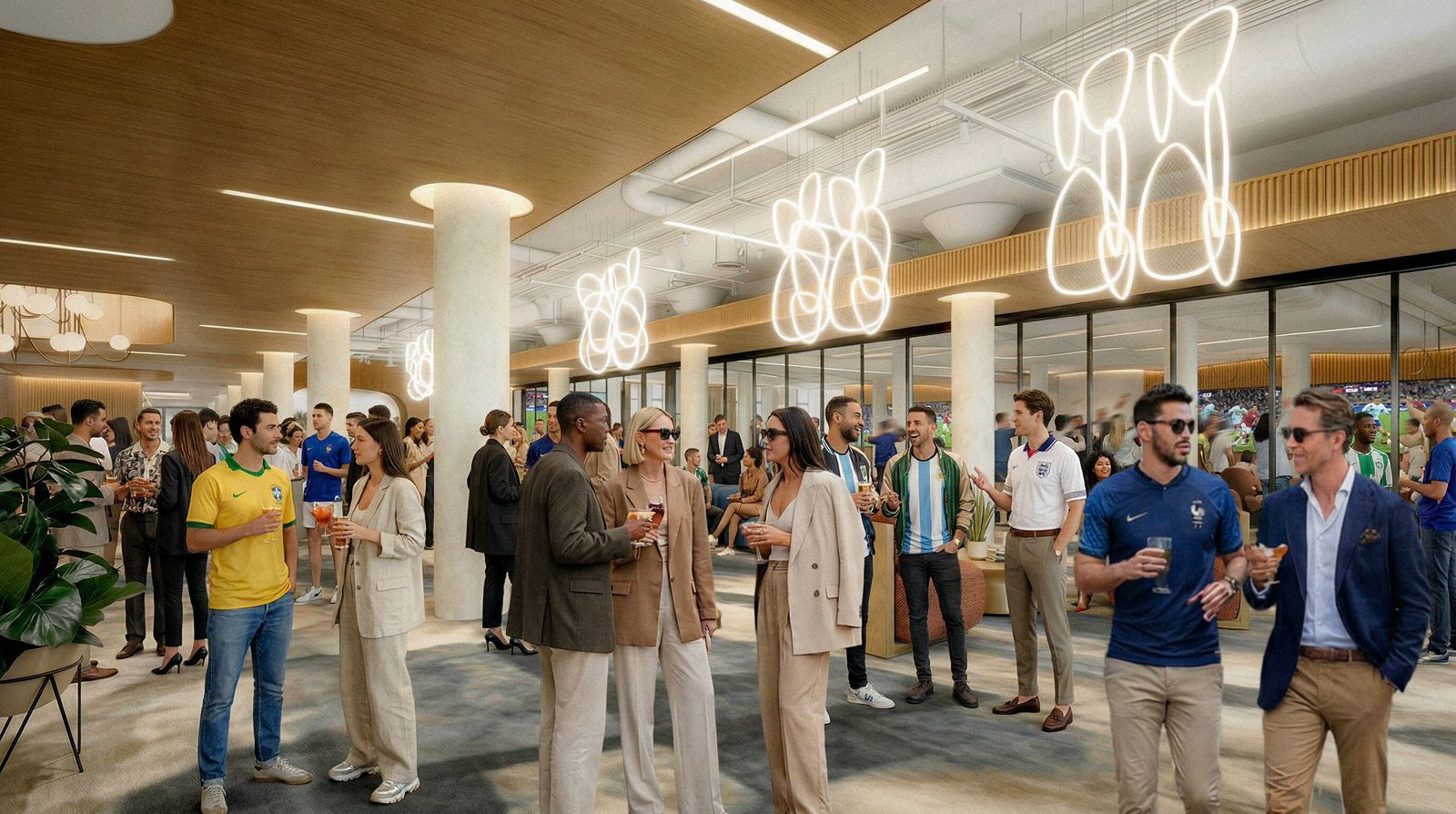
Club 26 is designed to concentrate energy. The layout, tiered spaces, and proximity among guests work together to create a shared, heightened environment. When a goal is scored, the reaction isn’t lost across thousands of seats — it builds and becomes collective.
This is where hospitality moves from background detail to a defining feature.
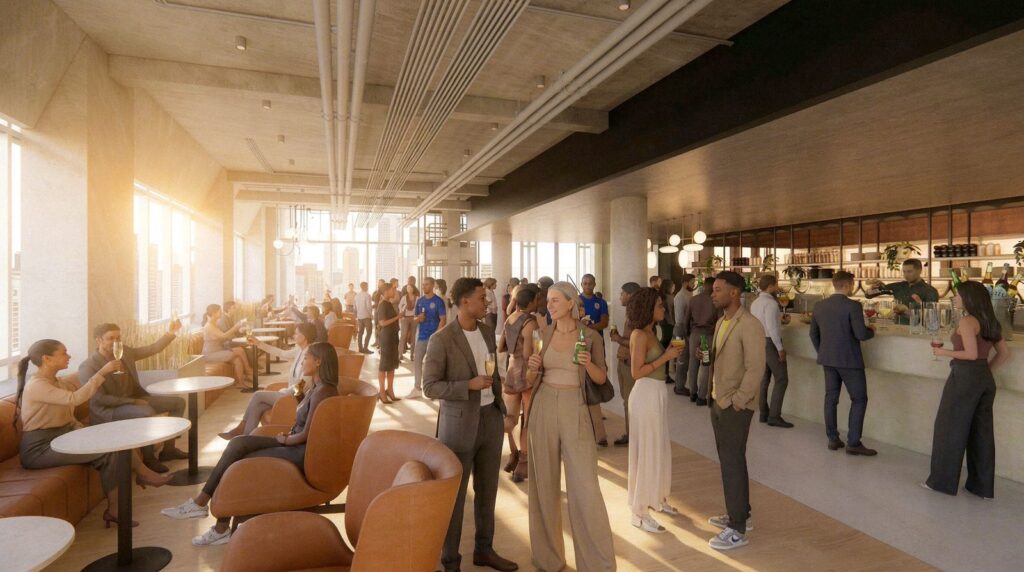
The experience is layered. Open areas create scale and atmosphere, while elevated tiers — VIP tables, private sections, branded zones — offer more curated ways to engage. It’s not about separating audiences, but about offering different ways to experience the same moment.
Service plays a critical role.
In a stadium, everything is transactional — lines, concessions, timing constraints. At Club 26, service is part of the flow. Food and beverage don’t interrupt the experience; they move with it.
This shifts the rhythm of the matchday.
Guests arrive earlier. They stay longer. What begins as a viewing experience naturally extends beyond the 90 minutes on screen.
For corporate clients, that extension is where value is created. Matches become anchors for broader interactions — meetings, hosting, networking. The World Cup provides the context; the venue shapes the environment.
More importantly, this reflects a shift in audience behavior.
A younger, globally mobile audience is less attached to the idea that authenticity requires being inside the stadium. What they seek is immersion — the feeling of being part of the moment, wherever it happens.
Club 26 is designed to deliver exactly that.
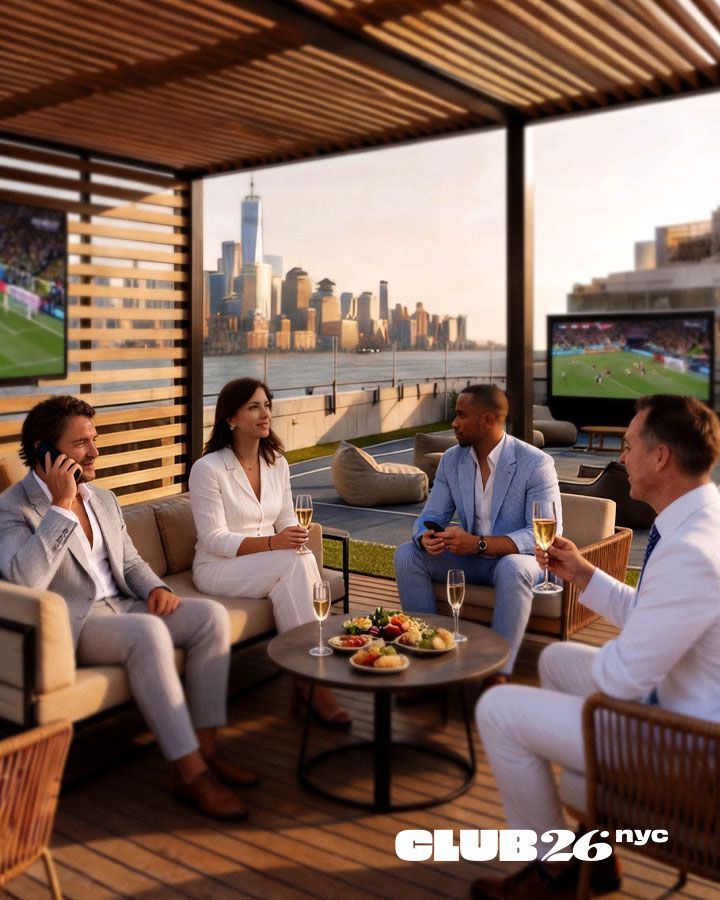
Through control — of sound, visibility, comfort, access, and social composition— the venue creates an environment that feels intentional.
In doing so, it addresses a growing gap: The lack of high-quality, scalable spaces for those who sit between casual spectators and stadium attendees.
This isn’t a traditional fan zone. It’s closer to a private members’ environment, — temporarily opened to a global audience.
As the tournament progresses, the energy evolves. Group stages bring diversity — different teams, different crowds. Knockout rounds sharpen focus. By the final, the atmosphere tightens, the stakes rise, and every moment is key.
The venue adapts to it.
What remains constant is the idea that the World Cup experience isn’t defined only by where the match is played, but by how it’s experienced.
And in 2026, that experience is curated.
Club 26 positions itself at the center of that shift — offering not just a place to watch, but a new way to experience matchday.
Please contact us :
hello@club26.nyc
www.club26.nyc
+1.212.602.1051 (cell/whatsapp)

